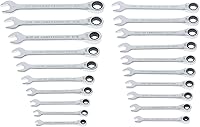
Ratchet vs Wrench: When to Use Each One (October 2026)
Use a ratchet with a socket for fast turning, and a wrench when a socket won't fit or you need to hold a fastener. The right choice depends on access, fastener shape and how much room you have to swing the handle.
On this page (8 sections)
- Ratchet vs wrench: what is the difference?
- When should you use a socket ratchet?
- When should you use a standard wrench?
- When is a ratcheting wrench the better choice?
- Which tool gives a better grip on the fastener?
- Can either tool loosen a stuck bolt?
- How do you pick the right size?
- Which should you choose for your next job?
Use a ratchet with a socket for fast turning, and a wrench when a socket won't fit or you need to hold a fastener. The ratchet vs wrench choice depends on access, the fastener shape and how much room you have to move the handle.
A socket ratchet turns a removable socket. A wrench grips the fastener directly, and a ratcheting wrench combines a wrench's slimmer shape with ratcheting action.
For a quick choice, use a socket ratchet when you can fit a socket over the fastener. Choose a standard wrench for side access, or a ratcheting wrench when you need repeated turns without lifting the tool after each stroke.
 Best for socket access
DeWalt 34-piece 1/4 and 3/8 inch drive socket set

Ratchet vs wrench: what is the difference?
A socket ratchet drives a socket, while a standard wrench grips the fastener directly. Both turn nuts and bolts, but their shape and access needs differ.
The socket sits over the fastener and connects to a ratchet handle. A reversible mechanism lets the handle turn the socket on one stroke and return without undoing that movement.
A combination wrench has an open end and a closed box end. The open end can reach a fastener from the side, while the box end surrounds it.
A ratcheting wrench looks like a combination wrench, but its box end has a ratchet mechanism. It turns the fastener on the working stroke and resets on the return stroke.
If you mean a socket wrench when you say "ratchet," the key difference is that its socket comes off the handle. A ratcheting wrench is one tool with the ratcheting mechanism built into its head.
When should you use a socket ratchet?
Use a socket ratchet when the socket can fit over the fastener and you want to turn it without resetting the handle. It's often convenient for repeated turns on an accessible bolt.
The socket surrounds the fastener, giving it contact around the head. That can be useful when the bolt is recessed or when you need to switch socket sizes without changing the handle.
A ratchet's return stroke saves time compared with lifting and repositioning a standard wrench after each turn. The DEWALT socket set has a 72-tooth ratchet with a 5-degree arc swing, which is designed to help in restricted areas.
A ratchet still needs room for its head and socket to reach the fastener. If a nearby panel blocks the socket, a thinner wrench may fit where the ratchet cannot.
Is a ratchet better in a tight space?
A ratchet can work well when handle swing is limited but the socket still fits. A small arc lets you make progress with shorter back-and-forth strokes.
The DEWALT ratchet's 5-degree arc swing means the handle can move through a small angle between clicks. It doesn't mean the tool fits every narrow gap; the socket and ratchet head still need clearance.
For a very cramped spot, compare the full path of the tool. Check whether you can place the socket on the fastener and move the handle through its working arc.
A flex-head ratchet may help you change the handle angle when nearby parts block a straight approach. If neither style clears the obstruction, consider a wrench or another access tool.
When should you use a standard wrench?
Use a standard wrench when you can reach the fastener from the side or a socket will not fit over it. Its slim head can reach some spots that a socket and ratchet cannot.
A combination wrench gives you 2 ways to engage the fastener. The open end slides onto it from the side, while the box end surrounds it when you can move the wrench over the head.
The CRAFTSMAN set pairs an open end with a 12-point box end. Its box end has a 15-degree offset for added knuckle clearance, and the set includes both SAE and metric sizes.
A standard wrench doesn't ratchet between strokes. You'll need to lift and reset it, so it can take longer when a fastener needs many turns and you have enough clearance for a ratchet.
Our guide to the best combination wrench sets can help if you want to compare a broader range of sizes and set options.
When is a ratcheting wrench the better choice?
Choose a ratcheting wrench when a standard wrench fits but you want to avoid resetting it after every turn. It keeps a wrench's direct grip on the fastener while adding a return stroke.
This can suit repeated turns in a gap where a socket and ratchet head are too bulky. The tool still needs enough room to seat its head, and the fastener needs to be accessible to the wrench end.
The VEVOR set includes 30 ratcheting wrenches in SAE and metric sizes. Its 72-tooth design has a stated 5-degree working angle, and the set comes with a storage rack.
A ratcheting wrench doesn't replace every standard wrench or socket. If its head won't fit, or you need a different socket profile, choose a tool that seats fully instead.
Learn how a ratcheting wrench works before choosing between a fixed wrench and a ratcheting set.
Which tool gives a better grip on the fastener?
Choose the tool that sits squarely on the fastener with the least wobble. A secure fit matters more than the speed advantage of a ratchet.
A correctly sized socket fits over the fastener and can be a good choice when you have room to place it straight. A box-end wrench also surrounds the fastener, but its size and point count must match the shape.
An open-end wrench grips from the sides. It can reach a fastener without access over its head, but use the correct size and keep the tool aligned to reduce slipping.
If the fastener is rounded or stripped, switching between a ratchet and wrench may not solve the grip problem. See our guide to removing a stripped bolt or rounded nut for options that suit damaged fasteners.
Can either tool loosen a stuck bolt?
Start with the tool that fits fully, then use a breaker bar if the bolt needs more leverage. A ratchet is for turning, and forcing its handle against a stuck fastener can damage the mechanism.
A wrench can also be a poor choice if it rocks on the fastener or puts your hand against a sharp edge. Stop if the tool slips, the fastener begins to round, or the handle cannot move safely.
A breaker bar has a longer handle for loosening tight fasteners. Once the bolt moves, a ratchet can speed up the remaining turns if it fits.
How do you pick the right size?
Match the socket or wrench to the fastener before turning it. A tool that is too loose can slip and damage the fastener.
Fasteners use different measurement systems, so don't assume an SAE size and a metric size are interchangeable. Our guide to measuring socket sizes explains how socket size markings work.
Keep the right sizes together so you can find them quickly. A socket set guide explains common set types and what to consider for a home garage.
Which should you choose for your next job?
Pick a socket ratchet for fast turns when a socket fits, a standard wrench for side access, and a ratcheting wrench when a slim wrench shape needs repeat turns. Check fit and working clearance before choosing by speed alone.
For general garage work, having both sockets and wrenches covers more fastener positions. Choose the tool that seats fully and gives you a safe path to move its handle.
Frequently asked questions
Is a ratchet the same as a wrench?
A ratchet is a handle with a one-way mechanism that turns a socket, while a wrench grips a fastener directly. A ratcheting wrench has a similar one-way mechanism built into its box end.
The terms overlap in casual speech, so check whether someone means a socket ratchet or a ratcheting wrench.
Should I use a ratchet or wrench on a tight bolt?
Use whichever tool fits the space and engages the fastener fully. A small ratchet arc can help where the handle has limited swing, while a wrench may fit where a socket cannot pass over the fastener.
Don't force a tool that rocks or slips.
Can a ratchet loosen a very tight bolt?
A ratchet can turn a fastener, but a stuck bolt may need a breaker bar to loosen it first. A ratchet's mechanism is intended for turning, and extra force can damage the tool.
See our guide to using a breaker bar before applying more leverage.
What is a socket wrench?
A socket wrench is a handle that drives a removable socket, often with a ratcheting mechanism. The socket fits over a fastener and can be swapped for another size.
A combination wrench is a single tool with open and box ends sized for one fastener range.