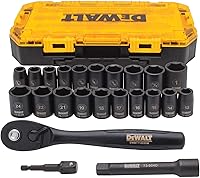
How Are Socket Sizes Measured?
Socket sizes are measured across the opening that fits the fastener, in inches for SAE sockets or millimeters for metric sockets. The square opening that attaches to a ratchet has a separate drive size.
On this page (8 sections)
- What does a socket size measure?
- Are socket sizes measured in SAE or metric?
- How do you measure a socket with a caliper?
- What is the difference between socket size and drive size?
- How can you tell if a socket fits the fastener?
- What should you check when socket markings are hard to read?
- Do wrenches use the same size measurement?
- Which socket size should you choose?
Socket sizes are measured across the opening that fits the fastener, in inches for SAE sockets or millimeters for metric sockets. The square opening that connects to a ratchet has a separate drive size.
That distinction helps you choose the right tool: match the socket opening to the nut or bolt head, then make sure its drive connection fits your ratchet. A correctly sized socket should seat fully without rocking or slipping.
What does a socket size measure?
A socket size measures the distance between opposite flat faces inside its opening. Those flats grip the matching faces of a nut or bolt head.
The measurement is not the socket's outside width or its length. A deep socket and a shallow socket can have the same socket size because both fit the same fastener width.
For example, a socket marked 10 mm is intended for a fastener with a 10 mm width across its flats. A socket marked 3/8 in uses an inch measurement for the same kind of fit.
Are socket sizes measured in SAE or metric?
Socket sizes are marked in SAE inches or metric millimeters. SAE sizes commonly use fractions of an inch, while metric sizes use whole or decimal millimeters.
These systems are close in some sizes, but they are not interchangeable. A 13 mm socket and a 1/2 in socket are near each other in measurement, yet one may be loose or fail to seat correctly on a particular fastener.
Check the marking before use. A mixed set can help if your work includes both standards, such as the Amazon Basics 201-piece mechanic's socket set, which includes Metric and SAE sizes.
Don't force a socket that seems close. A poor fit can round the fastener corners or make the tool slip.
How do you measure a socket with a caliper?
Measure across the inside flats of the socket opening, using the inside jaws of a caliper. Keep the tool square to the opening and avoid measuring across the corners.
- Open the caliper's inside jaws and place them against opposite flat faces.
- Hold the caliper straight across the opening, not at an angle.
- Read the measurement and compare it with standard SAE and metric sizes.
- Test the socket on the fastener by hand before using a ratchet.
A caliper is useful when markings have worn away, but it may not identify the socket standard on its own. The measured value can be close to sizes in both systems, so check the actual fit too.
What is the difference between socket size and drive size?
Socket size fits the fastener; drive size fits the ratchet. The drive is the square recess at the back of the socket, commonly marked as 1/4 in, 3/8 in, or 1/2 in.
A 10 mm socket can have a 1/4 in drive, for example. The two measurements describe different connections, so a socket's fastener size does not tell you which ratchet it fits.
If a socket fits the fastener but won't attach to your ratchet, check the drive size. An adapter can connect different drive sizes, though it adds length and may change access in a tight space.
How can you tell if a socket fits the fastener?
A socket fits when it slides fully over the fastener and sits snugly with little movement. It should engage the flats rather than balance on the corners.
Try the socket by hand before applying force. If it rocks, feels loose, or stops before reaching the base of the fastener head, check the size and shape again.
Some sockets have 6-point openings and others have 12-point openings. Both are measured across their flats, but the opening shape affects how the socket engages the fastener.
For a deeper socket that reaches past a protruding stud, see what a deep socket is and when to use one.
What should you check when socket markings are hard to read?
Start with the socket's size stamp and measurement system, then confirm the fit on the fastener. Many socket sets include both standards, so don't assume a similar-looking size is the correct one.
The GEARWRENCH 104-piece 3/8 inch drive metric master socket set includes metric sockets in standard and deep lengths, with hard-stamped size markings. Its 3/8 in measurement is the drive size, while the socket openings are metric.
If the marking has worn off, measure across the inside flats with a caliper. Keep a set organized by size so you can compare neighboring sockets; our guide to organizing sockets covers ways to keep sizes easy to find.
Do wrenches use the same size measurement?
Wrench sizes also refer to the opening across the flats of a fastener, but a wrench is measured at its jaws or box end. A wrench's size does not describe a ratchet drive.
The HORUSDY 32-piece combination wrench set covers both SAE and metric sizes, with 12-point box ends. Use the wrench marking to select the matching fastener width, just as you would with a socket.
A wrench may reach a fastener where a socket and ratchet cannot, while a socket can work with extensions and ratchets. For a vehicle wheel job, check what size socket lug nuts need before starting.
Which socket size should you choose?
Choose a socket by matching its marked opening size to the fastener, not by matching the drive size to the bolt. Use SAE or metric according to the fastener, and confirm the fit before turning it.
If access is the problem, choose the right socket shape and reach after confirming the size. A breaker bar adds leverage for stubborn fasteners, but it does not make a mismatched socket safer; read what a breaker bar is used for before applying more force.
For general garage work, a set with clearly marked sizes and the standards you need makes selection easier. Measure the fastener when uncertain, and stop if the socket slips or rocks.
Frequently asked questions
How are socket sizes measured?
Socket size is the width across the socket opening that fits over a fastener, usually shown in inches for SAE or millimeters for metric. This is different from drive size, which measures the square connection that fits a ratchet or extension.
Read the marking on the socket and match its measurement system to the fastener.
Is socket size measured inside or outside?
The size refers to the opening across the inside flats that grip a fastener, not the socket's outside diameter. A caliper can help check an unmarked socket, but measure the opening across opposite flat faces and compare it with the fastener's wrench size.
What is the difference between socket size and drive size?
Socket size describes the opening that fits the nut or bolt head. Drive size describes the square connection between the socket and the ratchet, such as 1/4 in, 3/8 in, or 1/2 in.
A socket can have one fastener size and a different drive size.
How do I measure a socket without its size marking?
Use a caliper to measure across opposite flat faces inside the opening, then identify whether the result is close to a standard SAE inch size or metric millimeter size. Check the fit on the fastener before applying force, since wear, rounding, or a slightly inaccurate measurement can cause slipping.