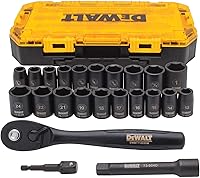
What Is a Deep Socket and When Do You Need One?
A deep socket is a socket with a longer barrel that reaches nuts set below a surface or on long exposed threads. Use one when a shallow socket bottoms out before it can fully engage the fastener.
On this page (6 sections)
A deep socket has a longer barrel than a standard shallow socket, so it can reach nuts below a surface or on long exposed threads. Use one when a shallow socket hits the end of a stud or can't reach far enough to engage the fastener.
The right choice depends on the fastener's position, the room around it, and the tool you're using. A deep socket adds reach, but its extra length can make it hard to fit in a tight space.
What is a deep socket?
A deep socket is a socket with a longer body that extends over a nut or bolt head. That extra length helps when the fastener is recessed or sits on threaded rod that would otherwise stop a shallow socket.
Both deep and shallow sockets come in different fastener sizes and drive sizes. To understand those measurements, see how socket sizes are measured.
A socket's depth doesn't tell you whether it's for hand use or impact use. Check the socket's intended tool type before attaching it.
When do you need a deep socket?
Choose a deep socket when the fastener is set back or has threads extending past it. The longer barrel can travel over the obstruction while the socket grips the fastener.
Common situations include:
- A nut on a long stud or threaded rod.
- A recessed nut inside a bracket or assembly.
- A fastener positioned below the surface around it.
- A job where a shallow socket bottoms out before reaching the nut.
Check the work area before choosing a socket. A deep socket's length can help with reach, but it also needs clearance around the socket and tool.
Can a deep socket reach recessed nuts?
Yes, a deep socket can reach a recessed nut if its outer diameter and length fit the opening. The socket still needs to seat squarely on the fastener, with enough room for the ratchet or other drive tool.
If the opening is angled or blocked to one side, a deep socket alone may not solve the access problem. A universal joint socket can help change the tool's angle when the joint and surrounding space allow it.
How is a deep socket different from a shallow socket?
A deep socket is longer, while a shallow socket has a shorter barrel. The longer body can pass over more exposed thread or reach farther into a recess; the shorter body is easier to fit where clearance is limited.
Neither type is right for every fastener. Use the shortest socket that reaches and fully engages the fastener without bottoming out.
| Choose a deep socket when… | Choose a shallow socket when… |
|---|---|
| Threads extend past the nut. | The fastener is exposed and easy to reach. |
| The nut sits in a recess. | The space around the fastener is tight. |
| A shallow socket bottoms out. | A longer socket would hit nearby parts. |
See deep socket vs shallow socket for more detail on the tradeoffs. Before either choice, confirm the socket fits the fastener and the drive tool.
How do you choose and use a deep socket?
Match the socket opening to the fastener and the drive end to your tool. Then check the fit and clearance before turning.
- Identify whether the fastener uses metric or inch sizing.
- Select the matching socket size and drive size.
- Confirm the socket is made for your tool, especially for impact use.
- Seat it fully and squarely on the fastener.
- Stop if it rocks, slips, or contacts nearby parts.
A six-point socket makes contact on the flats of a hex fastener. Many sets also include other socket types, but the fit and tool rating should guide your choice.
Should you use an impact deep socket?
Use an impact socket with an impact tool. Impact sockets are made for impact use; standard hand sockets aren't automatically suitable for an impact tool just because they fit the drive.
A deep impact set can help when you need extra reach with an impact tool. The BOEN set includes 1/2 in drive deep impact sockets in inch and metric sizes, plus extension bars and a universal joint.
Check that the fastener size and access match the set before buying. Its 1/2 in drive and impact use may not suit a smaller hand ratchet or a tight work area.
For a 3/8 in drive impact option, the GEARWRENCH set includes both standard and deep sockets, plus extensions and a universal joint.
Use a hand ratchet only with sockets intended for hand tools. If you need a set with both shallow and deep sockets for hand use, the TEKTON set includes 3/8 in drive six-point sockets in both depths and a ratchet.
What should you check before turning a fastener?
Make sure the socket is fully seated and the tool has enough clearance. A socket that sits crooked or only partly engages can slip when you apply force.
Check that:
- The socket size matches the fastener.
- The drive size matches the ratchet or tool.
- The socket type matches hand or impact use.
- The socket can move without hitting nearby parts.
- Any extension or joint is secure before use.
If a fastener is difficult to reach, adding an extension changes reach but doesn't change socket size. For lug nuts, confirm the size for your vehicle before starting; see what size socket you need for lug nuts.
Which deep socket should you choose?
Choose a deep socket when threads or a recess keep a shallow socket from reaching the fastener. Pick a hand-tool set for ratchet work or an impact socket set for an impact tool, and check drive size and clearance before you start.
The BOEN set covers deep impact use with a 1/2 in drive, while GEARWRENCH offers standard and deep impact sockets in 3/8 in drive. For hand-tool work with both socket depths, the TEKTON set includes a ratchet and six-point sockets.
When you want a full overview of sizes, drives, and set types, start with the complete guide to socket sets. Use deep socket vs shallow socket to make the final depth choice for a specific job.
Frequently asked questions
What is a deep socket used for?
A deep socket reaches a nut or bolt head that sits below a surface or on a length of exposed threaded rod. Its longer barrel can pass over the threads while the socket engages the fastener.
Use the correct size and drive, and make sure the socket seats fully before turning.
Can I use a deep socket instead of a shallow socket?
Yes, if the deep socket fits the space and fully engages the fastener. Its extra length can help with recessed nuts and exposed threads, but it may not fit where clearance is tight.
A shallow socket is shorter and often easier to use in confined spaces.
Are deep sockets stronger than shallow sockets?
Depth alone doesn't determine strength. Material, wall design, drive size, and whether a socket is made for hand or impact use all matter.
Match an impact socket to an impact tool, and use hand sockets with hand tools unless the socket is rated for impact use.
How do I choose the right deep socket size?
Match the socket opening to the fastener size and the drive end to your ratchet or tool. Check whether the fastener uses metric or inch sizing, then press the socket fully onto the fastener before applying force.
A loose or partial fit can slip and damage the fastener.