Deep Socket vs Shallow Socket: Which Do You Need? (October 2026)
Use a shallow socket when the fastener is easy to reach; choose a deep socket when a stud or long bolt extends past the nut. The right depth depends on clearance and how far the fastener projects.
On this page (8 sections)
- Deep socket vs shallow socket: what is the difference?
- Which socket depth should you choose for the job?
- Does drive size affect socket depth?
- What should you check before using either socket?
- How do you choose between the 3 sets?
- How can you tell if the socket is seated correctly?
- How should you store deep and shallow sockets?
- Which depth should you keep in your kit?
Use a shallow socket when the fastener is easy to reach; choose a deep socket when a stud or long bolt extends past the nut. In a deep socket vs shallow socket choice, clearance and fastener length matter more than socket depth alone.
A shallow socket is shorter and often easier to fit around nearby parts. A deep socket has a longer barrel that can pass over exposed threads, but it needs room to fit.
Keep both depths if your work varies. For a closer look at deep sockets, see what a deep socket is and when to use one.
 Best for impact work with both depths
VEVOR 91-piece 1/2 inch drive impact socket set
 Best for deep-only impact work
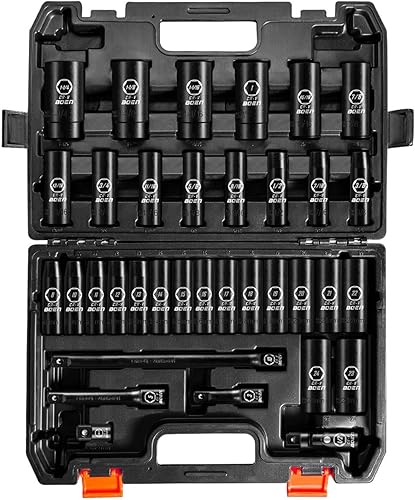
BOEN 35-piece 1/2 inch drive deep impact socket set
Deep socket vs shallow socket: what is the difference?
A deep socket has a longer barrel than a shallow socket. That extra length helps when a stud or bolt extends beyond a nut, while a shallow socket is shorter for work with limited clearance.
The socket opening must still match the fastener. Depth doesn't change the size you need, so use a reliable method to measure socket sizes before reaching for a different socket.
When does a deep socket fit better?
A deep socket fits better when the fastener's threaded end rises above the nut and would stop a shallow socket from seating fully. It can also help when the fastener sits down inside a narrow recess.
The socket's extra length can be a drawback if something nearby blocks it. Check the full path from the drive tool to the fastener, not just whether the socket opening fits over the nut.
When does a shallow socket fit better?
A shallow socket fits better when the nut sits on a short fastener and surrounding parts leave little room. Its shorter body can clear nearby edges where a deep socket would bump into something.
Use a shallow socket only if it seats fully on the fastener. If the bolt end prevents it from reaching the nut, switch to a deep socket rather than forcing the tool.
Which socket depth should you choose for the job?
Choose by checking the fastener and surrounding clearance before you attach the ratchet. If the fastener projects past the nut, start with a deep socket; if space is tight, try a shallow one that seats fully.
Look at whether the nut is on a stud, how much thread extends beyond it and whether a nearby panel or bracket blocks the socket. A few seconds of inspection can prevent a poor fit.
Don't rely on depth to solve every access problem. An extension bar moves the handle farther from the fastener; it doesn't change a socket's depth or make a sideways path.
If you need to loosen a stubborn fastener, learn when a breaker bar is used before applying more force. Use the right tool for the job and follow its maker's instructions.
Does drive size affect socket depth?
Drive size and socket depth describe different things. Drive size is the connection between the socket and tool; depth describes the socket barrel's reach over the fastener.
A large drive can be awkward in a tight area, even when the socket depth is right. A smaller drive may fit the workspace more easily, but it still needs to match the force and tool intended for the job.
Check both the socket and tool markings before use. If you're building a general kit, our complete guide to socket sets explains how size ranges and drive sizes fit together.
What should you check before using either socket?
Check the size, drive fit and clearance before turning the fastener. The socket should sit fully on the fastener and connect securely to the ratchet or impact tool.
A 6-point socket contacts a hex fastener on its flats. Avoid using a socket that rocks, only partly engages or has the wrong measurement system.
Use impact-rated sockets with impact tools. The VEVOR set includes deep and shallow impact sockets in SAE and metric sizes, plus extensions and a universal joint. {{product B0G4LBWPKK | A mix of impact socket depths and size systems for jobs that call for both.}}
A deep-only set can make sense if you already have shallow sockets. The BOEN set has deep impact sockets in SAE and metric sizes, with extensions and a universal joint. {{product B0B91WQ9J6 | Deep impact sockets for exposed threads or recessed fasteners when you don't need shallow sockets in the same set.}}
For hand ratchet work, choose a set intended for hand tools. The TEKTON set includes both depths in a 3/8 in drive, along with a ratchet, extensions and a universal joint. {{product B07P6RJXJ9 | A hand-drive option with both socket depths for jobs that don't call for an impact tool.}}
How do you choose between the 3 sets?
Choose the VEVOR set for both depths in impact work, the BOEN set for deep-only impact needs, or the TEKTON set for hand ratchet use. Match the set's size range and drive to the fasteners and tool you have.
The VEVOR set covers SAE and metric sizes and includes deep and shallow sockets. Its 1/2 in drive and impact purpose make it a fit for work planned around an impact tool.
The BOEN set is also a 1/2 in drive impact set, but it contains deep sockets only. Consider it when you need that depth and don't need a second set of shallow sockets.
The TEKTON set includes both depths, but it is a hand-drive 3/8 in set with a ratchet. Choose it for hand-tool tasks where its included sizes fit.
How can you tell if the socket is seated correctly?
The socket should sit squarely and fully on the fastener before you turn it. If it wobbles or stops short, check for the wrong size, an obstruction or a fastener end that needs a deeper socket.
Keep the tool aligned with the fastener as you apply force. Side loading can make the socket slip, especially when the handle or extension is at an angle.
If a nut is rounded or the socket can't grip it securely, stop and consider the right removal method. Our guide to removing a stripped bolt or rounded nut covers options for damaged fasteners.
How should you store deep and shallow sockets?
Keep both depths grouped by size so you can compare them quickly. Separate shallow and deep rows or trays, and return each socket to its marked place after use.
Clear markings make it easier to spot the size and depth you need before starting a job. If your sockets are mixed together, use a simple socket organization system to make the next search faster.
A case can keep a set together for carrying or storage. After a job, check that every socket is back in its place so you can see what's missing.
Which depth should you keep in your kit?
Keep both depths if your jobs include a mix of exposed threads and tight clearances. Pick a deep socket when the fastener extends beyond the nut, and use a shallow socket when it seats fully and nearby parts limit room.
Choose the 3/8 in TEKTON set for hand ratchet work with both depths, the VEVOR set for broad impact coverage with both depths, or BOEN when you need deep impact sockets only. For related tool basics, see the universal joint socket guide.
Frequently asked questions
What is the main difference between deep and shallow sockets?
A deep socket has a longer barrel, giving it room to pass over a stud or long bolt that extends beyond a nut. A shallow socket is shorter and can fit where nearby parts leave little room.
Both need to match the fastener size and drive tool.
Can a deep socket replace a shallow socket?
A deep socket can reach many fasteners that a shallow socket reaches, if there's enough room around it. But its longer barrel may hit nearby parts or fail to fit in a tight gap.
Keep both depths available if your jobs include exposed threads and confined spaces.
Can I use an impact socket with a hand ratchet?
Impact sockets are made for impact tools, while a hand ratchet set is intended for hand use. Match the socket's drive size to the tool and follow the tool maker's instructions.
Don't use a chrome hand socket with an impact wrench unless its maker says it's suitable.
Do deep sockets make it easier to reach recessed fasteners?
A deep socket can reach past a longer stud or bolt, but it does not add sideways reach by itself. For a fastener set back from the opening, an extension bar may help.
Check the space around the fastener so the socket and extension can line up.
Should I buy a socket set with both depths?
A set with both depths is useful if you work on fasteners with and without exposed threads. It saves you from stopping when one socket bottoms out on a stud or won't clear nearby parts.
Check its size range and drive size against the tools and fasteners you use.


