Chrome Vanadium vs Chrome Molybdenum Sockets: Which Is Better? (October 2026)
Use chrome vanadium sockets with hand tools and chrome molybdenum sockets with impact tools. The right choice depends on the tool and the socket’s impact rating, not steel names alone.
On this page (8 sections)
- Chrome vanadium vs chrome molybdenum: which should you choose?
- What is the difference between Cr-V and Cr-Mo steel?
- Can you use chrome vanadium sockets with an impact wrench?
- Why shouldn't you use a regular hand socket for impact work?
- Does the finish tell you which socket to buy?
- Which socket type suits your job?
- What should you check before buying sockets?
- Chrome vanadium vs chrome molybdenum: which is better for you?
Use chrome vanadium sockets with hand tools and chrome molybdenum sockets with impact tools. The alloy name is a useful clue, but the socket’s intended use and impact rating should decide what you attach to a ratchet or wrench.
Chrome vanadium, often marked Cr-V, is a common steel for hand sockets. Chrome molybdenum, often marked Cr-Mo, is commonly used for impact sockets that face repeated shock.
Those patterns have exceptions. An impact socket set can use chrome vanadium steel, so don't choose by material label alone.
 Best for a broad hand-tool kit
Amazon Basics 201-piece mechanic's socket set
 Best for impact-tool work
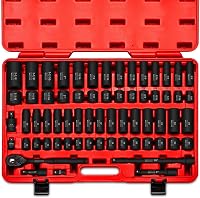
NEIKO 65-piece 1/2 inch drive master impact socket set
Chrome vanadium vs chrome molybdenum: which should you choose?
Choose a socket rated for the tool you plan to use: hand sockets for manual ratchets, impact sockets for impact wrenches. Chrome vanadium is common in hand-drive sets, while chrome molybdenum is common in impact sockets.
The names refer to alloying elements in steel. Those ingredients influence how the steel behaves, but they don't tell you everything about how a finished socket was made or what tool it is meant to handle.
A socket's design, heat treatment, wall thickness and maker's rating also matter. The safer buying rule is to check the stated use first, then consider the material.
| Product | Best for | Material | Pieces | Included sizes | Our score |
|---|---|---|---|---|---|
| Amazon Basics 201-piece mechanic's socket set | a broad hand-tool kit | Chrome-vanadium steel | 201 | SAE and metric | 8.3 |
| NEIKO 65-piece 1/2 inch drive master impact socket set | impact-tool work | Chrome-vanadium steel | 65 | 9.0 | |
| TEKTON 46-piece 3/8 inch drive 6-point socket and ratchet set | everyday 3/8 in hand-drive jobs | Alloy steel | 46 | 8.5 |
| Feature | Chrome vanadium (Cr-V) | Chrome molybdenum (Cr-Mo) |
|---|---|---|
| Common use | Hand sockets and general mechanic sets | Impact sockets |
| Tool pairing | Ratchet, breaker bar or hand wrench | Impact wrench, when the socket is impact-rated |
| Typical finish | Often polished chrome | Often dark phosphate or black finish |
| Main buying check | Confirm it is a hand socket for your drive tool | Confirm the impact rating and drive fit |
| Material label alone enough? | No | No |
What is the difference between Cr-V and Cr-Mo steel?
Chrome vanadium and chrome molybdenum use different alloy mixes, but the labels alone don't determine the socket's safe use. In practice, the main shopping distinction is whether the socket is designed for hand force or impact force.
Both are alloy steels. Chrome and vanadium are added to one type, while molybdenum is part of the other.
Their names tell you something about the material, but not the complete manufacturing process or performance of a specific socket.
Why does chrome molybdenum show up on impact sockets?
Chrome molybdenum is often used for impact sockets because those tools deliver repeated blows through the socket and onto the fastener. The socket needs to tolerate that shock without cracking during normal use.
Impact sockets may also have thicker walls and a dark protective finish. These are common design cues, not a substitute for checking that the socket is actually marked or sold for impact use.
Why does chrome vanadium show up on hand sockets?
Chrome vanadium is widely used in hand sockets and mechanic tool sets. A polished finish is common, and the sockets are made for turning fasteners with a hand ratchet or similar tool.
That doesn't make every Cr-V socket identical. Check its drive size, shape and intended use, and don't put a hand socket on an impact wrench unless its maker specifically rates it for that use.
Can you use chrome vanadium sockets with an impact wrench?
Only use a chrome vanadium socket on an impact wrench when it is explicitly rated for impact use. A typical polished hand socket isn't made for the repeated shock of an impact tool.
A cracked socket can send fragments outward. Wear eye protection, keep your hands clear of the socket, and stop if you see a crack, spreading or damage.
The NEIKO 65-piece 1/2 inch drive master impact socket set is specifically described as an impact set and uses chrome vanadium steel. That example shows why the impact designation matters more than treating Cr-V as an automatic no.
If you're comparing impact sets, see our guide to choosing an impact socket set. For a smaller hand-drive kit, the TEKTON 3/8 inch drive 6-point socket and ratchet set is identified as a hand-tool set.
Why shouldn't you use a regular hand socket for impact work?
A regular hand socket may not withstand repeated impact force, even if its drive fits the wrench. Fit tells you whether it attaches; it doesn't prove it can safely handle the tool's force.
Impact sockets are designed for impact use. Their thicker walls and material choices help them handle shock, while a hand socket is built around manual turning.
Don't rely on color alone. A dark socket may be an impact socket, but verify the manufacturer's description or markings before using it with powered impact equipment.
Does the finish tell you which socket to buy?
Finish can help you recognize a socket, but the impact marking and maker's instructions are more reliable. Polished chrome is common on hand sockets, while black phosphate is common on impact sockets.
Chrome finishes can help protect a hand socket from corrosion and make it easier to wipe clean. Dark finishes are common on impact sockets, but a coating doesn't guarantee the socket's safe working use.
For example, the Amazon Basics 201-piece mechanic's socket set has chrome vanadium steel and a polished chrome finish. Its description presents it as a general mechanic's set, so don't infer an impact rating from the material.
Which socket type suits your job?
Match the socket to the tool and fastener: a hand socket for a manual ratchet, and an impact-rated socket for an impact wrench. Then choose the drive size, socket depth and opening that fit the job.
A 6-point socket contacts the flat sides of a hex fastener. It can help reduce the chance of rounding compared with a 12-point socket when the fastener is tight or worn.
For a manual ratchet set that includes shallow and deep 6-point sockets, consider the TEKTON 46-piece 3/8 inch drive 6-point socket and ratchet set. Its material is described as alloy steel, so don't relabel it as Cr-V.
When do you need a deep socket?
Choose a deep socket when a nut sits on a long threaded stud or the fastener is recessed. A shallow socket may not reach far enough over the exposed threads.
Depth doesn't change whether a socket is impact-rated. If you need a deep socket for powered work, confirm that the specific socket is made for impact use.
Our guide to deep sockets and when to use them explains how socket depth changes access. For fasteners in tight spaces, check the tool clearance too.
When should you use a breaker bar?
A breaker bar gives you a longer handle for loosening a stubborn fastener by hand. It doesn't turn a hand socket into an impact socket, and force should be applied smoothly rather than with a sudden strike.
Before using one, check that the socket and drive fit the bar and fastener. Read what a breaker bar is used for for help choosing between a bar and ratchet.
What should you check before buying sockets?
Check the tool rating, drive size, fastener system and socket depth before comparing alloy names. Those details determine whether the set fits your tool and the task.
First, decide whether the work calls for a hand ratchet or an impact wrench. Then confirm the socket set is intended for that tool and that its drive size matches.
Next, consider SAE versus metric sizes, shallow versus deep reach and 6-point versus 12-point openings. If the set will stay in a garage, a fitted case can help keep sizes together.
Use a complete guide to socket sets to compare drive sizes and set contents. If the fasteners are on a vehicle wheel, check our guide to the socket size for lug nuts and confirm the size for your vehicle.
Chrome vanadium vs chrome molybdenum: which is better for you?
Pick chrome vanadium for a hand-tool set and chrome molybdenum when choosing an impact socket, but verify the exact socket's rating either way. The tool's intended use matters more than the alloy label.
Choose a hand-drive set such as the Amazon Basics kit for a range of manual socket tasks. Choose an impact-designated set such as NEIKO's for impact-wrench work.
For occasional car repairs, start with the drive type and sizes you actually need. Our guide to basic car repair tools can help you plan the rest of the kit.
Frequently asked questions
Is chrome vanadium or chrome molybdenum better for sockets?
Neither is better for every job. Chrome vanadium sockets are common for hand tools, while chrome molybdenum is often used for impact sockets because it can handle repeated impact stress.
Check whether the socket is made for your tool and job; the alloy name alone doesn't confirm its rating.
Can you use chrome vanadium sockets with an impact wrench?
Use a socket specifically rated for impact tools. Many chrome vanadium sockets are intended for hand use, and a standard hand socket can crack under impact force.
Some impact sets use chrome vanadium steel, so check the socket's impact designation and the manufacturer's instructions instead of relying on the alloy name.
Are chrome molybdenum sockets stronger?
Chrome molybdenum sockets are commonly chosen for impact use because the alloy can tolerate repeated shock, but strength depends on the full design and heat treatment. A material label by itself doesn't show the socket's impact rating, size accuracy or safe working limits.
How can you tell an impact socket from a regular socket?
Look for an impact designation and follow the maker's instructions. Impact sockets often have a dark finish, but color alone isn't proof that a socket is rated for impact tools.
Use the proper retaining pin or ring if the tool and socket maker calls for one.
Can chrome vanadium and chrome molybdenum sockets fit the same ratchet?
They can fit the same ratchet if the drive size matches, such as 3/8 or 1/2 in. The steel type doesn't determine drive compatibility.
Match the socket opening to the fastener, confirm the drive size, and use only sockets rated for the tool you're operating.