What Size Wrench Fits an Oil Drain Plug?
There is no single wrench size for every oil drain plug. Check your vehicle’s service manual or measure the plug’s hex head, then use a snug-fitting wrench or socket.
On this page (7 sections)
- What size wrench do you need for an oil drain plug?
- How can you find the drain plug size?
- Is a wrench or a socket better for an oil drain plug?
- How do you avoid rounding or damaging the plug?
- Can a ratcheting wrench fit an oil drain plug?
- What should you check before loosening the plug?
- Which tool should you use for your oil drain plug?
There is no universal wrench size for an oil drain plug. Check your vehicle’s service manual or measure across the plug’s hex flats, then choose a snug-fitting wrench or socket in the correct metric or SAE size.
The plug size can vary by vehicle and replacement part, so don’t rely on a size that worked on another car. A loose tool can round the fastener and make a routine oil change harder.
What size wrench do you need for an oil drain plug?
Use the size specified in your vehicle’s service manual. If you don’t have the manual, measure the distance across two opposite flat sides of the plug head and match that measurement to a tool.
Measure the hex head itself, not the threaded portion or washer. If the plug is recessed or hard to reach, a socket may be easier to seat straight than a wrench.
Tools come in metric and SAE sizes. Check both if you’re unsure, but choose the one that fits without rocking; a near match can slip under force.
How can you find the drain plug size?
Clean the plug head and measure its flats with a caliper if you have one. A wrench or socket that slides fully onto the head with minimal play is a useful fit check.
If you’re using a ruler, line it up across the widest part of the hex head. Read the measurement carefully, then compare it with the sizes in your tool set.
A socket-size guide can help you understand how socket sizes are measured. That distinction matters because the size marked on a socket refers to the fastener it fits, while the drive size refers to the ratchet connection.
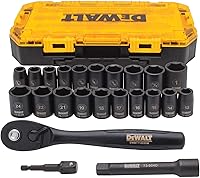
This WORKPRO set includes 1/4 in and 3/8 in drive sockets in metric and SAE sizes. Its 3/8 in ratchet and extension bar can help you reach a plug with limited clearance, but confirm that a socket in the set matches your plug before starting.
The set’s listed sockets include 3/8 in drive sizes up to 13 mm metric and 9/16 in SAE. If your plug needs a larger socket, use the correct size from another set rather than forcing a smaller one.
Is a wrench or a socket better for an oil drain plug?
Use the tool that fits the plug securely and lets you keep it straight. A socket is often convenient when the plug is accessible from below, while a wrench can help where surrounding parts block a socket or ratchet.
A six-point socket is a common choice for hex fasteners because it contacts the flats. Make sure it is fully seated before turning.
A box-end wrench also surrounds the fastener and can work in tighter spaces. For more on choosing between tools, see ratchet vs wrench.
The HORUSDY set includes 16 metric and 16 SAE combination wrenches, with 12-point box ends offset by 15 degrees. Its size range runs from 7 mm to 22 mm and from 1/4 in to 1 in, giving you multiple sizes to check against a plug head.
Use only a wrench that fits the flats closely. A 12-point wrench can engage a hex head in more positions, but a poor fit can still slip.
How do you avoid rounding or damaging the plug?
Seat the wrench or socket fully and turn steadily. Stop if the tool rocks, shifts, or begins to slip instead of applying more force.
Keep the tool aligned with the plug so it doesn’t tilt off the flats. If the plug is stuck, confirm the tool size and condition before trying again; a rounded head may need a different removal method.
Avoid gripping the plug with pliers or using an adjustable wrench that has play. For a damaged fastener, read how to remove a stripped bolt or rounded nut.
Can a ratcheting wrench fit an oil drain plug?
A ratcheting wrench may fit if the plug has a hex head and the wrench matches its exact size. Check the surrounding space first, since the ratcheting head needs room to move.
A ratcheting wrench can help when a regular wrench’s swing is limited. It still needs a secure fit, and the ratcheting mechanism doesn’t make an incorrect size safe to use.
The VEVOR set includes metric sizes from 8 mm to 24 mm and SAE sizes from 1/4 in to 1 in. Its 72-tooth ratcheting heads are designed for a 5-degree working angle, which can help in confined areas.
Check that the wrench head fits squarely over the plug and has enough clearance to move. If it binds or rocks, use a different tool.
What should you check before loosening the plug?
Confirm the correct plug, tool size, and access before turning. Park and prepare the vehicle according to its service instructions, and make sure it is stable before working underneath.
Look for signs that the plug head is already worn or rounded. If it is, a standard wrench may not grip well, so avoid repeated attempts that can worsen the damage.
Some vehicles use a plug with a different head style or a replacement plug that differs from the original. The service manual is the best source for the correct procedure and tool size.
Which tool should you use for your oil drain plug?
For the question what size wrench for an oil drain plug, start with the service manual, then verify the fit on the fastener. Use a snug wrench or socket in the matching metric or SAE size, and stop if it slips.
Choose a socket when you can seat it straight and have room for a ratchet. Choose a box-end or ratcheting wrench when surrounding parts limit socket access, as long as the wrench fits closely.
For a broader starter kit, see basic tools for car repair. If a plug is rounded, use the right removal approach before continuing the oil change.
Frequently asked questions
What size wrench fits an oil drain plug?
The correct size depends on your vehicle and the drain plug installed. Check the service manual for the specified tool size, or measure across the plug’s hex flats and match it to a snug-fitting wrench or socket.
Don’t guess by using a tool that almost fits.
Is an oil drain plug measured in metric or SAE?
It can be either, depending on the vehicle and plug. Use the size standard given in the service manual, or measure the hex head and compare it with metric and SAE tools until you find a close, secure fit.
Avoid forcing a tool that rocks or slips.
Should I use a wrench or socket on an oil drain plug?
Use whichever fits the plug securely and gives you room to work. A six-point socket can grip the flats, while a box-end wrench may fit where a socket cannot.
Avoid an adjustable wrench if it can’t stay snug, since slipping can round the plug.
Can I use a ratchet to loosen an oil drain plug?
A ratchet with the correct socket can loosen a drain plug if it fits squarely and you have enough clearance. Turn steadily and stop if the socket slips or the plug resists unexpectedly.
Follow your vehicle’s service instructions for loosening and tightening.