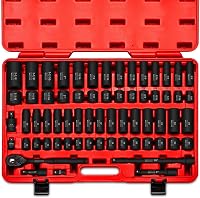
Best ICON 1/2-Inch Socket Sets: How to Choose
A 1/2 inch drive socket set is the right size for lug nuts, suspension bolts and other fasteners that need real leverage. Pick a set whose socket range covers the fasteners on your car, in the drive size your ratchet and impact tools already use.
On this page (9 sections)
- What does a 1/2 inch socket set actually do?
- Why compare an ICON 1/2 inch socket set with the alternatives?
- Which 1/2 inch socket sets are worth comparing?
- Should you pick SAE or metric sockets?
- What finish and markings should you look for?
- How much does piece count and case design matter?
- How should you handle sockets safely and keep them working?
- When is a 1/2 inch set the wrong choice?
- Which 1/2 inch socket set should you buy?
A 1/2 inch drive socket set is the right pick for lug nuts, suspension bolts and other fasteners that need real leverage. Choose a set whose socket range matches your vehicle's fasteners and whose drive size matches the ratchet or impact wrench you already own.
The keyword here is the ICON 1/2 inch socket set, but ICON is not the only name in this size class. The sets below show the range you'll meet: a 23-piece kit for a small toolbox, an 83-piece kit for a full range, and an impact set for power tools.
Each one teaches a different part of the decision.
What does a 1/2 inch socket set actually do?
A 1/2 inch socket set covers the large end of hand tool work. The drive size describes the square hole in the socket that the ratchet or extension fits into, and 1/2 inch is the middle step between 1/4 inch and 3/4 inch drive.
The larger square gives you more leverage per turn. That is why lug nuts, caliper bolts, engine mounts and suspension hardware often call for 1/2 inch drive rather than a smaller ratchet.
Socket size is separate from drive size. A 1/2 inch drive set can hold sockets from 3/8 inch up to 1-5/16 inch and from 10 mm up to 32 mm.
The drive stays 1/2 inch while the socket opening changes to fit the nut.
Check your ratchet first. If you already own a 1/2 inch ratchet or impact wrench, buying a set in the same drive size means every socket works with the tools you have.
A 1/2 inch set is a poor fit for tiny fasteners. Interior trim screws and small brackets want a 1/4 inch drive set, which is lighter and reaches into tight spots.
Many owners keep both.
Buy 1/2 inch drive when the bolt needs leverage; buy smaller when it needs reach.
Why compare an ICON 1/2 inch socket set with the alternatives?
The ICON 1/2 inch socket set sits in the same class as the sets below, so the comparison should rest on what is in the box rather than on the badge. ICON is a store brand sold through a single retailer, and that shapes who it suits.
If you buy from a store brand, you generally get a straightforward kit at a mid-range price, but you depend on that store for replacements. A brand sold widely lets you add a single socket or a replacement ratchet from more places.
Look at the piece count before the brand. A 23-piece set and an 83-piece set both call themselves 1/2 inch drive, but the 83-piece covers far more fastener sizes and adds deep sockets.
Look at the finish too. Chrome plating wipes clean and resists corrosion on hand tools.
A black oxide or manganese phosphate finish is more typical of impact sockets and hides wear on heavy work.
The best way to judge any ICON 1/2 inch socket set is to read its size list against the fasteners you actually turn. A set with the right sizes in your range beats a bigger set with sizes you'll never use.
Judge the set by its size list and its drive match, not by the name on the case.
Which 1/2 inch socket sets are worth comparing?
These three sets cover the main buying choices: a complete kit for a full range of fasteners, an impact set for power tools and a compact set for a small box. Scores weigh specs and features against what a 1/2 inch drive buyer needs.
The best 1/2 inch drive socket set roundup compares these sets in more detail. If you work mostly on small fasteners, our 1/4 drive socket set guide covers the lighter end.
TEKTON 83-piece: the complete kit
The TEKTON set is the fullest option here. It has every size from 3/8 to 1-5/16 inch and 10 to 32 mm in both standard and deep lengths, which means you rarely stop work to hunt for a missing size.
The 6-point sockets apply force to the flat sides of a fastener rather than the corners. That design helps prevent round-off on worn nuts.
The set also includes a 90-tooth ratchet with a 4-degree swing arc for tight spaces.
Die-stamped size markings are large and cannot wear off like printed labels. The polished chrome finish wipes clean and resists corrosion.
A carrying case holds the whole set.
Choose it when you want one set to cover most 1/2 inch work. Its size range and deep sockets make it the best pick for most people.
If you already own a full set of hand tools, this kit is a large addition to the box.
GEARWRENCH 39-piece: the impact set
The GEARWRENCH set is built for impact wrenches. It holds metric impact sockets in standard and deep lengths, made from chrome molybdenum steel for strength under power tool torque.
The black oxide finish resists corrosion and suits heavy work.
Off-corner loading reduces fastener rounding, the same principle the TEKTON set uses. Laser-etched markings and a hard size stamp make each socket easy to identify.
This set is metric only. That is fine for most modern cars, but older vehicles with inch hardware need SAE sockets from another set.
It also pairs best with an impact wrench rather than a hand ratchet.
Pick it if you use an impact wrench and work on metric fasteners. Our impact socket set guide covers more power-tool options if you want to compare.
DeWalt 23-piece: the compact kit
The DeWalt set keeps things small. It holds a 72-tooth quick-release ratchet, 10 SAE sockets from 7/16 to 1 inch and 10 metric sockets from 13 to 24 mm, plus a 5 inch extension.
That is enough for lug nuts and many engine bay jobs without a heavy case.
DirectTorque technology on the metric sockets is designed to help prevent rounding and give a better grip on fasteners. The set weighs about 16 ounces, so it travels easily in a trunk or a small toolbox.
It does not include deep sockets. If your work reaches nuts on long studs, you'll need a separate deep set or a set with deep sockets in the box.
Choose it for a small toolbox or a car kit, not as your only set for full suspension work. A professional socket set adds more range if you work on cars often.
Should you pick SAE or metric sockets?
Pick SAE sockets if your vehicle uses inch-size fasteners and metric sockets if it uses millimetre sizes. Many modern cars are metric throughout, while older vehicles and some truck hardware mix the two.
A mixed set covers more cases but takes more space. The DeWalt set here splits its sockets between SAE and metric, which suits a general kit.
The GEARWRENCH set is metric only.
Look at the fasteners you expect to touch. If you're buying for a specific car, check a few bolt heads with a caliper or a socket you already own.
Deep sockets matter more than the SAE/metric split for some jobs. Nuts on long studs or recessed fasteners need a deep socket to reach the nut and clear the thread.
Standard sockets keep the set compact.
Decide your fastener system first, then choose standard or deep lengths to match the work.
What finish and markings should you look for?
Look for a finish that matches how you'll use the set. Chrome plating is easy to clean and resists corrosion on hand tools.
Black oxide or manganese phosphate is more typical of impact sockets and hides scuffs on heavy jobs.
Markings matter because a socket you can't read wastes time. Die-stamped or hard-stamped sizes cannot wear off like printed labels.
Laser etching is clear but can fade with heavy use, so a hard stamp is the more durable backup.
Check the ratchet tooth count too. A 72-tooth ratchet needs a 5-degree swing to engage the next tooth.
A 90-tooth ratchet needs about 4 degrees. The finer ratchet works better in tight spots under a car.
Point count is the other detail. 6-point sockets grip the flat sides of a hex fastener.
12-point sockets fit more starting positions but contact the corners, which can round a worn nut. For 1/2 inch drive work on large, tight fasteners, 6-point is the safer default.
Choose a hard-stamped 6-point socket in a finish that matches hand or impact use.
How much does piece count and case design matter?
Piece count tells you how many items are in the box, not how much work you can do. A 23-piece set can cover common lug nut sizes, while an 83-piece set adds deep sockets and a wider size range.
Count the sockets first, then the accessories. Extensions, a universal joint and a ratchet all take a slot in the case.
A set with fewer sockets but a better ratchet can serve you well.
Case design matters for storage. A molded case keeps sockets in labeled slots so you can see what is missing.
A case that is too large for your toolbox wastes space, and one that is too small forces you to carry sockets loose.
Check the case latch and hinge. A case that opens in a drawer or a trunk should hold its sockets in place when carried.
Some sets ship in a blow-mold case that stacks well in a garage.
Weight is part of the trade-off. The DeWalt set weighs about 16 ounces.
The TEKTON set weighs about 40 pounds, so it belongs on a shelf rather than in a carry bag.
Buy the piece count that covers your sizes, and a case that fits where you store it.
How should you handle sockets safely and keep them working?
Treat every socket as a tool with a load limit. Standard chrome sockets are not rated for impact wrench torque.
If you use a power tool, switch to impact sockets like the GEARWRENCH set.
Match the socket to the fastener. A socket that is too small or worn can slip and round the nut.
A socket that is too large can spin and damage the corners. Test fit by hand before you apply force.
Use the right drive accessories. A 1/2 inch extension adds reach but also flex.
Long extensions and universal joints reduce the torque that reaches the fastener, so keep the chain short where you can.
Keep sockets clean and dry. Wipe chrome sockets after use to remove grease and grit.
A light oil on the ratchet mechanism helps it run smoothly. Store the set in its case so sizes stay together.
Inspect sockets for cracks or worn corners. A cracked socket can split under load.
Replace any socket that shows damage rather than risking a slip.
Use impact-rated sockets with impact tools, keep the drive chain short and inspect sockets before heavy work.
When is a 1/2 inch set the wrong choice?
A 1/2 inch set is the wrong choice when the fasteners are small. Interior trim, dashboard screws and small brackets need a 1/4 inch drive set that reaches into tight spots without the bulk.
It is also the wrong choice when you need a full range in a small box. A compact 1/2 inch kit like the DeWalt set covers common sizes but leaves out deep sockets.
If your work needs deep sockets, buy a set that includes them.
Impact work needs an impact set. A chrome hand set used on an impact wrench can fail under torque.
Keep hand sockets and impact sockets separate so each tool stays within its rating.
Budget matters too. A larger set costs more and takes more storage.
If you only turn lug nuts a few times a year, a compact set is the sensible buy.
Skip 1/2 inch drive for small fasteners and impact work; buy the set that matches the job.
Which 1/2 inch socket set should you buy?
Buy the TEKTON 83-piece set for most people, because its size range and deep sockets cover the widest set of 1/2 inch jobs. Pick the GEARWRENCH set if you use an impact wrench on metric fasteners.
Choose the DeWalt set for a small toolbox or a car kit.
The choice comes down to the work you do. A full range and deep sockets suit general car repair.
An impact set suits power tools. A compact kit suits travel and light jobs.
Whichever you choose, match the drive size to your tools and the socket sizes to your fasteners. That way the ICON 1/2 inch socket set you compare against the picks here gets judged on the same terms, and you buy the set that fits your work.
For more options in this size class, see our best 1/2 inch drive socket set roundup and our impact socket set guide. If small fasteners are your main job, the 1/4 drive socket set guide covers that end.
Frequently asked questions
Is a 1/2 inch socket set too big for everyday jobs?
A 1/2 inch set suits lug nuts, suspension bolts and other large fasteners, but it is bulky for small nuts and interior trim. Pair it with a 1/4 inch set for the small stuff and keep the 1/2 inch set for jobs that need leverage.
Do I need deep sockets in a 1/2 inch set?
Deep sockets reach nuts on long studs and let you clear a protruding thread. Standard sockets keep the set compact, so buy deep only when your work includes studs or recessed fasteners that a shallow socket cannot reach.
What is the difference between SAE and metric sockets?
SAE sockets fit inch-size fasteners and metric sockets fit millimetre-size fasteners. A mixed set covers more cars, while a metric-only set is lighter if your vehicle uses metric hardware throughout.
Can I use a standard socket with an impact wrench?
Standard chrome sockets are not built for impact wrench torque. Use sockets sold as impact rated, made from chrome molybdenum steel, so the socket and the tool share the same load rating.
How many pieces should a 1/2 inch socket set have?
Piece counts run from about 20 to more than 80, and the count matters less than what is in the box. Check that the socket sizes, drive accessories and case match the work you plan to do.